
Front-end development is evolving faster than ever. But also, more confusing. With so many frameworks and libraries like Angular and React. Both are industry favorites, but they take very different approaches to building modern web applications. This blog will walk you through the basics of each framework, compare their strengths and when you should pick one over the other.
Before exploring the differences and strengths of Angular and React, let’s first understand why frameworks are used and what purpose they serve.
What is a Framework?
A framework is a collection of libraries and rules that helps developers focus on building features instead of handling repetitive setup tasks. It helps developers build applications faster and in an organized way.
I know what you might be thinking — when we already have languages like HTML, CSS, and JavaScript, why should we bother with frameworks? Don’t worry, that’s a question almost every beginner has. If you already know JavaScript, it’s natural to wonder why learning a framework is necessary.
Well, the answer is - yes, you can definitely build apps with just those technologies. But as your application grows bigger, maintaining and organizing the code becomes harder. That’s exactly where frameworks come into play — they make it easier to manage and scale your application as it grows.
So now you’ve got an idea of what a framework is and why we use it, right? Great! Let’s move on and dive into what Angular and React are all about.
What is Angular?
Angular is a front-end framework developed and maintained by Google. It’s a complete package that gives you everything you need to build large-scale web applications. It is built using TypeScript. It comes with features like Routing, Forms, HTTP Client, Dependency injection and a lot more.
In simple, Angular is like a full toolbox where everything is already included you just follow need to follow the rules and build.
What is React?
React is also a front-end framework developed and maintained by Meta (formerly Facebook). React focuses mainly on building User Interfaces (UI). It is built using JavaScript.
At this point, you might be wondering — since Angular is also used to build UIs, why do we say React is specifically focused on UI?
Yes, Angular is also used to build UIs, but the key difference lies in their scope. Angular is a complete framework that includes components, routing, state management, and more. React, on the other hand, mainly focuses on the UI. For features like routing and state management, you need to bring in additional libraries.
It is very flexible. You can choose your own libraries for routing, state management. It is known for Virtual DOM which makes UI faster.
In Simple, React is like a full toolkit which you will get building blocks for UI, but you need to decide what extra pieces (libraries) to add for routing, state management based on your project needs.
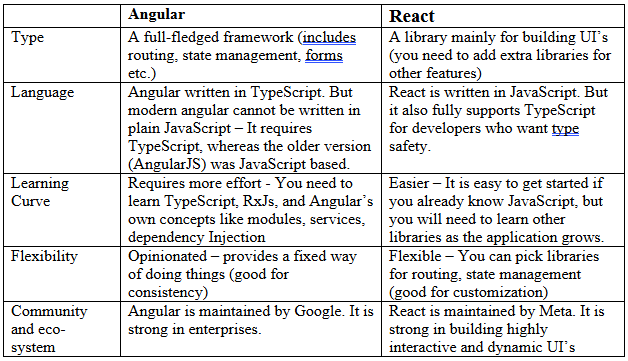
Key Differences: (Angular Vs React):
Angular and React basic snippets:
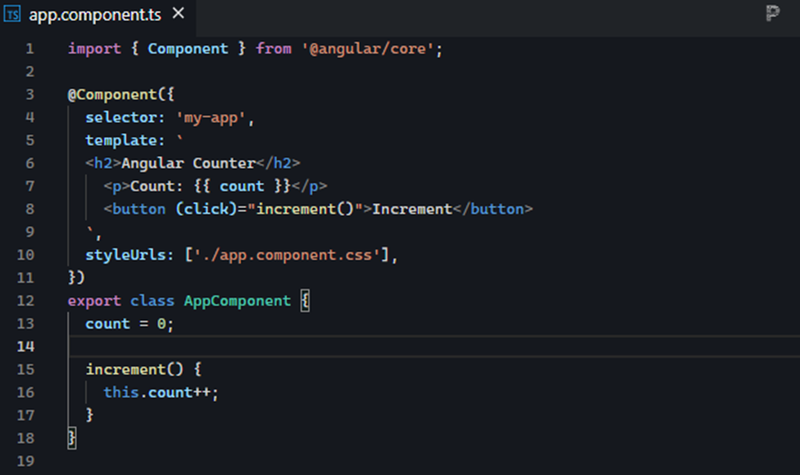
Angular basic counter snippet
The snippet explains how the count value will be increased when the user clicks the counter button in Angular framework.
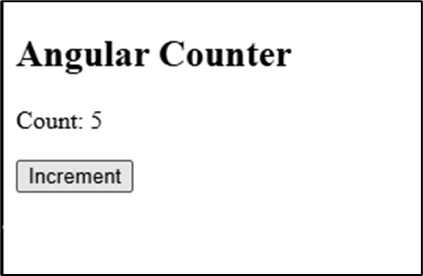
This is the output for the above snippet. If the user clicked the button 5 times.
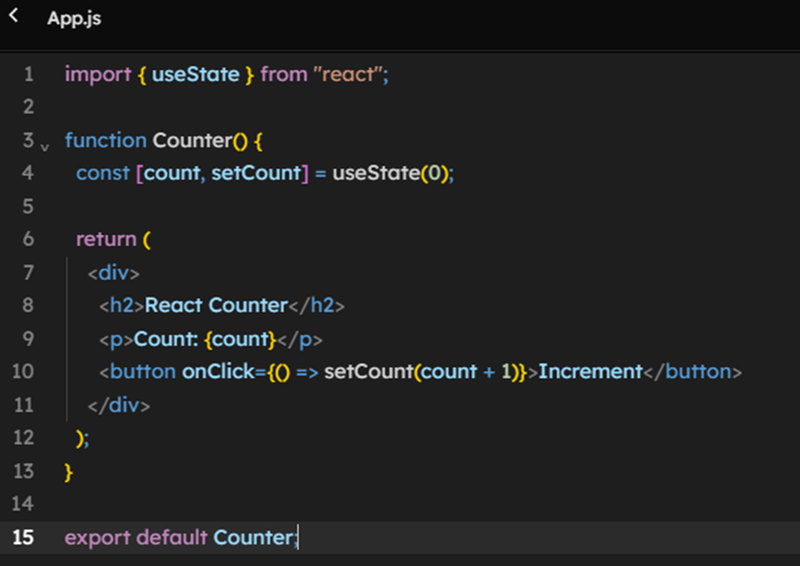
React Basic counter snippet:
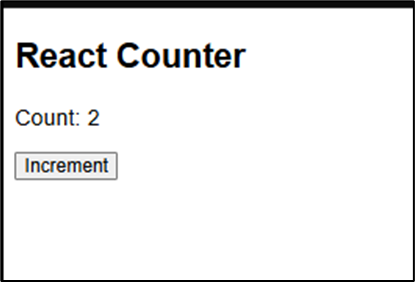
The snippet explains how the count value will be increased when the user clicks the counter button in React framework.
This is the output for the above snippet. If the user clicked the button 2 times.
When to Go with Angular, When to Go with React:
Choosing the framework whether to go with Angular or with React depends on the kind of project you are building and the application requirements. Both are powerful.
Go with Angular if:
- You’re building a large-scale, enterprise-level application.
- You want a complete solution (routing, state management, forms, HTTP requests all in one package).
- Your team is comfortable with TypeScript and prefers strong structure and rules.
- You need long-term maintainability and well-defined architecture.
Go with React if:
- You’re building a lightweight, fast, and highly interactive UI.
- You want flexibility to choose your own libraries for routing, state management, etc.
- Your team prefers JavaScript (with optional TypeScript) and values simplicity.
- You’re aiming for quick development and fast learning curve for newcomers.
Conclusion:
Both Angular and React are powerful tools for modern web development, but their strengths cater to different needs. Angular, being a complete framework, is well-suited for large-scale, enterprise-level applications where structure, scalability, and maintainability are critical. On the other hand, React, as a flexible library, excels at building highly dynamic and interactive user interfaces with the freedom to choose supporting libraries as needed.